

Table of Contents
Welcome to the TEC Lowdown, our monthly breakdown of the technology partnerships, platforms and innovations shaping the delivery of the world’s biggest sports events and the way fans and other stakeholders experience them. This month:
Major League Baseball (MLB) & The World Series
What: The pinnacle of “America’s Pastime”, professional baseball
When: Regular season runs from March to September, followed by the Post season and culminating in The World Series in October
Where: US and Canada
Organiser/s: Major League Baseball, comprising 30 clubs across the American and National Leagues
Major League Baseball may be America’s oldest major sporting league but through a mixture of data, innovation and partnerships it has transformed itself into one of sport’s most sophisticated technology ecosystems. What began with pitch tracking has evolved into a league-wide infrastructure that captures the game, turns it into data, applies AI and analytics, and feeds that intelligence into athlete performance, officiating, broadcasting and fan experiences.
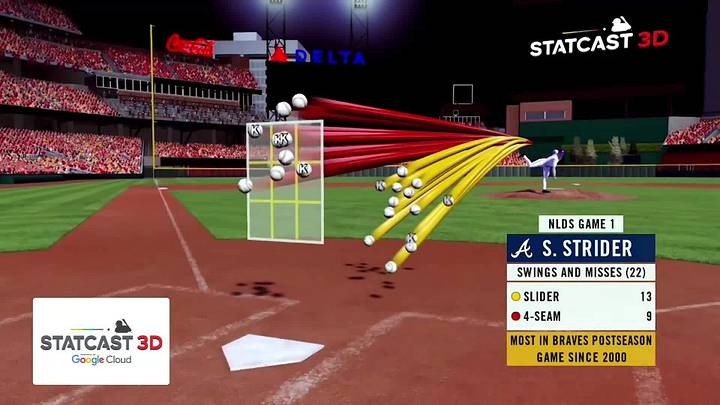
Capturing the Game - Statcast and Hawk-Eye
At the centre of MLB’s technology ecosystem is Statcast, its proprietary league-wide tracking system. Introduced across all 30 ballparks in 2015, Statcast has evolved from a pitch-tracking system into a comprehensive platform measuring the movement of the ball, players and bat.
Since 2020, the system has been powered by Sony’s Hawk-Eye optical tracking technology. Each MLB stadium has 12 Hawk-Eye cameras, with five high-frame-rate cameras focused primarily on pitch and bat tracking and seven covering players and batted balls.
The resulting data covers everything from pitch velocity, bat speed and swing path through to fielding routes and catch probability.
Statcast has become much more than a stats package. It provides the underlying data layer for MLB’s digital products and for those its clubs and broadcasters partners. It also powers Baseball Savant, the league’s official public analytics platform which gives fans and analysts access to the data through real-time game feeds, leaderboards and 3D data visualisations.
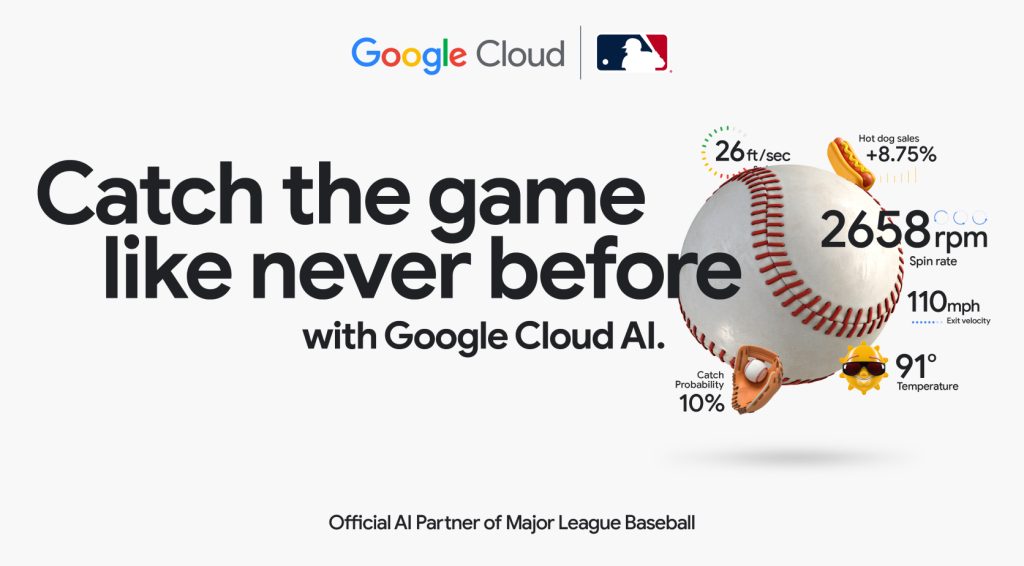
Turning Data into Intelligence - Google Cloud and AI
A single MLB game can generate more than 15 million data points. This scale of data requires significant computing infrastructure, and Google Cloud was recruited as a key technology partner in 2020, to provide the cloud, data and analytics capabilities that allow MLB to process information generated across its 30 ballparks.
The partnership has also enabled MLB to process data closer to real time, allowing information generated on the field to reach clubs, broadcasters and fans faster, with AI increasingly be used to convert the data into insights.
For the 2026 season, the league launched MLB Scout Insights, a new tool powered by Google Cloud AI and Gemini, available via the Gameday app, to analyse historical and Statcast information alongside the live game situation to surface relevant context for fans. It essentially provides the expert insights of a colour commentator as part of the digital experience.

Insights-Driven Fan Experience - Adobe and Zoom
If Google Cloud is helping MLB understand the game, Adobe is increasingly helping it understand and engage the fan.
MLB’s long running and recently expanded partnership with Adobe is focused on creating more personalised digital experiences and increasing the organisation’s ability to produce and activate content at scale.
The league leverages a technology stack that includes Adobe Experience Platform, Firefly Services and Custom Models, and Adobe Express to connect fan data, create personalised content, adapt assets for different channels and give fans new ways to create their own MLB-themed content.
When combined with Statcast’s real time data this can create a new level of personalisation for fans. For example, a player hitting a home run generates a Statcast event. Fan data can identify audiences with a particular interest in that player or team. AI can help determine what is relevant to who, while Adobe’s technology can create and activate content across digital channels.
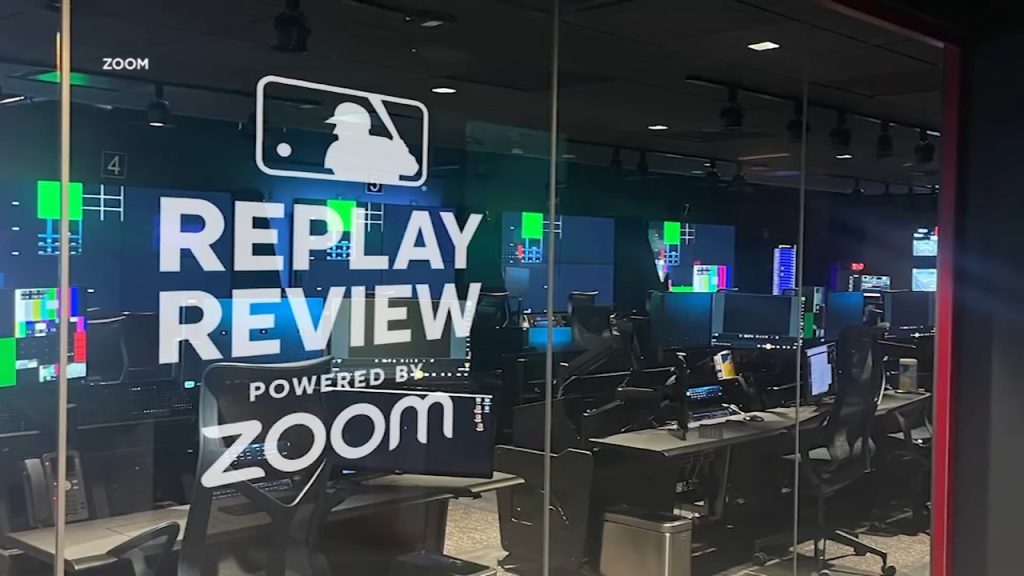
Since 2023, MLB have used their partnership with Zoom to bring greater transparency and engagement to the league’s replay review process, connecting the senior umpire at each game directly with the “Zoom Replay Operations Center”. For fans watching on MLB Network and Apple TV, the process is no longer an audio-only exchange: they can see the replay centre in action and hear analysis as decisions are reviewed. By bringing the different stages of replay review together through a single connected platform, Zoom gives fans greater visibility into how decisions are made, making a traditionally behind-the-scenes part of the game a more accessible and engaging part of the live viewing experience.
The Athlete Experience - Technology for the Athlete
Beyond powering the fan experience MLB clubs use increasingly Statcast alongside technologies such as Trackman and Rapsodo to analyse pitching, hitting and physical performance. The real time data produced is used to inform scouting, player development, opposition analysis, training and tactical decision-making.
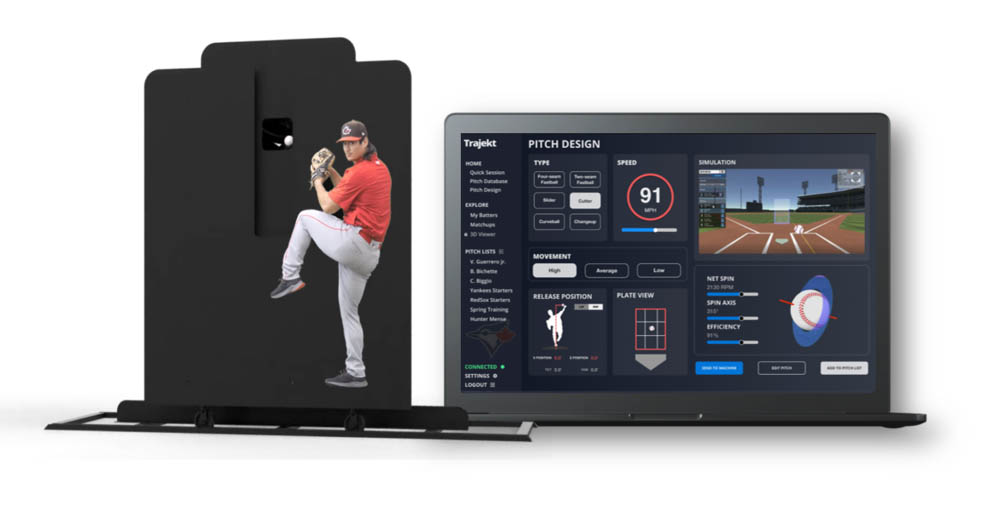
Digital simulation also plays a key part with Trajekt’s robotic pitching technology used to recreate opposing pitchers, allowing hitters to practise against realistic representations of the players they are likely to face.
Technology Becomes Part of the Rules
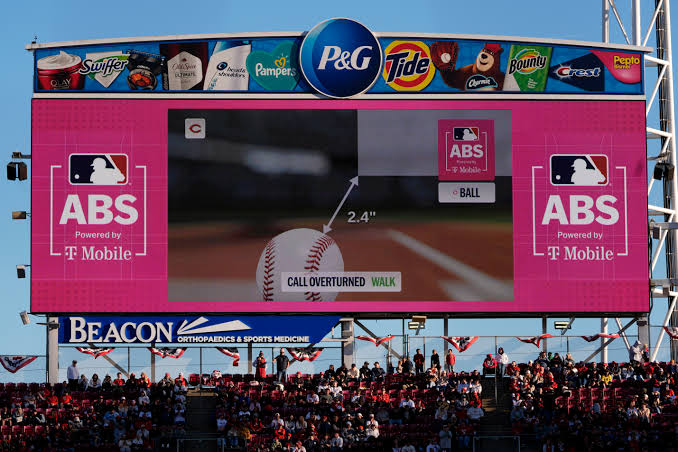
Another tech-driven initiative new for 2026 is MLB’s Automated Ball-Strike (ABS) Challenge System, which uses the same Hawk-Eye tracking infrastructure that powers Statcast. Pitchers, catchers and batters can challenge a ball-or-strike decision, with the pitch location compared against the batter’s strike zone.
The system operates over a private 5G network from T-Mobile, with the outcome displayed on the stadium scoreboard and broadcast within approximately 15 seconds.
World Series - MLB Technology at its Most Visible
The World Series is where MLB’s technology ecosystem comes together most visibly, combining tracking data, AI, advanced broadcast production and digital distribution to turn the event into a global, multi-platform media product.
Statcast data increasingly forms part of the broadcast itself, with pitch movement, exit velocity and swing metrics transformed into real-time graphics and visualisations. AI is also supporting production, with FOX Sports and Google Cloud using Gemini-powered FOX Foresight to surface relevant information and storylines during live coverage.
That technology then enables the World Series to reach audiences well beyond the traditional broadcast. In 2025, it was distributed across 203 countries and territories by 44 media partners in 16 languages, spanning television, streaming, mobile, web and social platforms. MLB’s expanded partnership with Sportradar, running through 2032, further extends its global reach, distributing MLB data and content across Sportradar’s network of sports media companies, betting operators and digital platforms.
The result is no longer simply a broadcast feed, but a connected global ecosystem of live video, data, statistics, graphics, highlights and personalised content, adapted for different platforms, markets and audiences.
A Digital Operating System for Baseball
Through their network of partners and proprietary platforms, MLB has created a connected ecosystem that functions as a digital operating system for baseball – one in which the physical game becomes a continuous source of data, intelligence, content and experiences that is shaping how the MLB understands, officiates, produces and ultimately plays the game.