
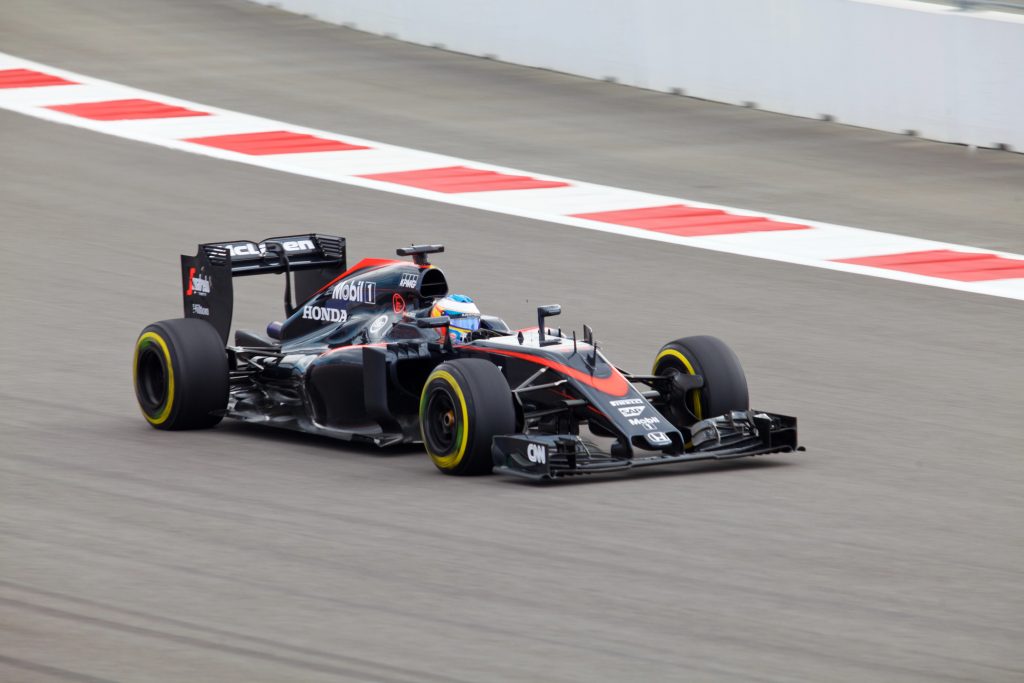
Motorsport is one of the most geographically, technically, and operationally mobile sports in the world. A single season can span across five or six continents, shifting weekly between permanent circuits, temporary street tracks, rural airfields, remote mountain passes, desert stages, and coastal roads. One weekend may bring the dense urban heat of the Singapore Grand Prix, the next the cool, rolling hills of MotoGP at Silverstone, followed by the unforgiving gravel and snow transitions of the WRC’s Monte Carlo Rally. Even within the same series, the environment can swing from a purpose‑built facility like Circuit of the Americas, to a fully temporary pop‑up motorsport venue such as Formula 1 Las Vegas.
Despite these shifting landscapes, and despite wildly different regulatory frameworks, power availability, connectivity maturity, and physical infrastructure — fans, teams, broadcasters, sponsors, safety officials, and event organisers all expect the same thing every weekend: a unified, consistent, high‑quality digital experience, no matter where in the world the championship is racing.
Delivering that level of consistency across such diverse environments is not a matter of shipping more equipment, adding more people, or building bigger on‑site operations. Instead, modern motorsport has learned to do more with less by relying on a flexible architecture that blends mobile infrastructure, venue infrastructure, and a cloud‑driven digital backbone that travels with the championship.
This is how today’s racing series — from Formula 1 and MotoGP to endurance championships, regional categories, and rallying — spin up complete digital ecosystems in record time. Timing loops, high‑speed cameras, RF receivers, fibre overlays, production galleries, team telemetry networks, media zones, and race control systems must be unpacked, deployed, calibrated, integrated, and activated with extreme precision. Days later, they must be dismantled and rebuilt somewhere completely different.
A Cloud‑Enabled Technology Stack
A championship’s mobility challenge is solved not just through hardware, but through processes, orchestration, automation, and cloud‑based standardisation. People follow repeatable playbooks: mobile and venue systems plug into a unified cloud orchestration layer; and every race weekend, no matter how large or small, connects into the same global digital spine.
This is how motorsport delivers the same world‑class digital experience in Monaco, Mandalika, Sao Paulo, and the Swedish forests. It is how global series maintain operational reliability, competitive fairness, and broadcast quality across continents. And it is why the cloud has become the essential foundation for scaling motorsport’s digital operations across vastly different track environments, infrastructure realities, and logistical constraints.
At the heart of motorsport’s ability to operate across continents is a flexible, modular technology stack that blends mobile systems, venue infrastructure, and a cloud‑driven orchestration layer. This is the combination that enables a championship to function consistently whether it is setting up in a fully serviced F1 paddock in Barcelona, a MotoGP fly‑away round in Indonesia, or a WRC stage deep in the forests of Scandinavia. Although the conditions and infrastructure change dramatically, the digital expectations remain identical.
Trackside and mobile infrastructure form the first layer of this ecosystem. Timing loops and beacons must be embedded into surfaces ranging from smooth permanent asphalt to temporary street circuits and even the gravel or ice of rallying. Laser and LiDAR systems generate precision timing, while high‑frame‑rate cameras capture everything from photo‑finishes to incident reviews. RF receivers and radio systems coordinate teams, marshals, and safety crews. Portable fibre units, temporary switching racks, and compact edge‑compute devices stabilise video and data before it is passed on to the wider network. These are designed to be highly mobile and are often installed under tight deadlines. Formula 1 street races, for example, require kilometres of fibre and hundreds of camera positions to be installed on roads that were open to public traffic just days earlier. Rallying events demand ruggedised equipment capable of operating in harsh terrain with unpredictable power and connectivity.

The next layer is venue infrastructure. Some circuits, like Silverstone or Suzuka, offer strong permanent digital foundations with extensive fibre networks, fixed camera mounts, and established operations rooms. Other venues like Las Vegas, Jeddah, Mexico City, or many new regional circuits, require a blend of whatever permanent facilities exist and extensive temporary overlays to bring them up to championship standard. Even within the same series, the level of infrastructure can shift dramatically.
A MotoGP race in Qatar might rely heavily on the circuit’s permanent network, while a race in Argentina may require portable power, temporary broadcast cabins, and hybrid network setups. In Formula E or regional touring car series, entire venues may be built from scratch inside urban areas or stadium complexes. Wherever the sport travels, the aim is the same: extend what exists, and quickly build what doesn’t.
Overseeing everything is the cloud, which acts as the championship’s global nervous system. It is the one layer that remains identical no matter where the racing happens. The cloud standardises data formats, ensures consistency in timing pipelines, supports live video routing across continents, and powers global OTT platforms, fan applications, and authenticated digital services. It also enables remote production, reducing freight, personnel, and on‑site operations.
Because these services run in geographically distributed cloud regions, they can scale automatically during peak moments such as race starts or dramatic late‑race battles. In practice, this means a Formula 1 race in Melbourne can be produced from a hub in the United Kingdom, or that MotoGP’s live telemetry can be analysed identically whether the bikes are in Malaysia or Portugal. WRC broadcasts can pull high‑definition video from remote mountain stages into centralised review centres thousands of kilometres away. Even smaller series can achieve professional‑grade digital output by relying on shared cloud tools rather than large local installations.
The three layers — mobile, venue, and cloud — connect through a tightly engineered integration pipeline. Data is captured and stabilised at the edge, transported across whichever networks are available, and passed securely to the cloud for global distribution. Fibre is used where possible, but bonded cellular, microwave, and satellite links are always ready to fill in the gaps. SD‑WAN and encrypted contribution protocols make sure the flow is reliable and predictable regardless of local conditions.
Once the data reaches the cloud, it becomes accessible to broadcasters, officials, teams, and fans anywhere in the world. A camera feed activated in Monaco is handled in exactly the same way as a camera feed activated in Mexico City or at the WRC’s Monte Carlo mountain stages. This uniformity is the key to delivering a unified digital experience across continents.
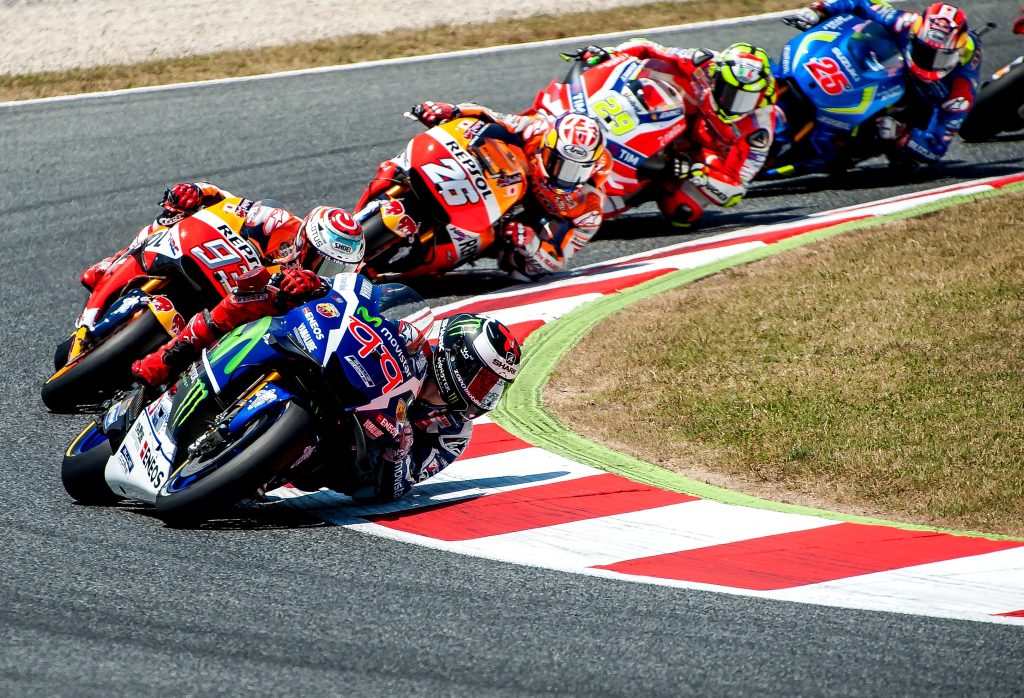
People and Processes: The Hidden Infrastructure of Global Motorsport
What makes this system work is not technology alone but the processes and people who operate it. The mobility of motorsport depends on a human operating model that is every bit as engineered, standardised, and resilient as the hardware and software. Global championships rely on detailed playbooks that govern every step of setup, testing, and teardown across each venue, ensuring that the same procedures are followed whether the event takes place in a permanent circuit, a temporary street track, or a remote rally stage.
Technical crews are cross‑trained so they can move seamlessly between mobile deployments, venue integration, and cloud‑based workflows. This flexibility allows small, highly skilled teams to handle an immense range of tasks with confidence and speed, reducing the amount of freight and personnel required from race to race. Clear escalation paths ensure that any issue — whether involving RF coordination, telemetry integrity, timing accuracy, or video contribution — can be diagnosed and resolved quickly. Rehearsed workflows between race control, broadcast teams, safety personnel, team engineers, and cloud operations establish a shared rhythm that remains consistent even when the venue is unfamiliar, or the terrain is extreme.
This human layer transforms a sprawling, constantly moving operation into a repeatable and reliable global system. Motorsport’s technology stack is therefore not a fixed installation but a travelling digital organism, one that compresses, expands, adapts, and reconfigures itself depending on the environment. Its success depends on mobility, flexibility, precision, and the ability to spin up and shut down world‑class digital infrastructure at extraordinary speed. And it is this fusion of skilled people, disciplined processes, mobile capability, venue adaptation, and cloud‑driven consistency that makes a unified digital experience possible across different continents, climates, and cultures.
Want to see how digital membership platforms are reshaping the business of sports?
Download the whitepaper and explore the tech, tactics and tools powering deeper connections and recurring revenue.
Prefer a conversation? Schedule an intro call here to explore tailored solutions for your organisation.