
Table of Contents
Welcome to the TEC Lowdown, our monthly breakdown of the technology partnerships, platforms and innovations shaping the delivery of the world’s biggest sports events and the way fans and other stakeholders experience them. This month:
International Rugby Union & The Nations Championship
What: New global Rugby Union competition pitting the best of both hemispheres against each other.
When: The bi-annual competition replaces summer tours and the Autumn Internationals, in the years it takes place.
Where: Matches have taken place all over the world with the 2026 finals taking place at the Allianz Stadium in Twickenham, England.
Organiser/s: Six Nations Rugby and SANZAAR, the governing bodies of Rugby Union in the Northern and Southern Hemispheres respectively.
November sees the conclusion of the inaugural Rugby Nations Championship, a new international competition jointly established by Six Nations Rugby and SANZAAR, bringing together 12 of the world’s leading rugby nations in a battle between the Northern and Southern Hemispheres. It adds another premier international competition into a global schedule that includes the Six Nations, The Rugby Championship and the Rugby World Cup.
Behind all this action, technology is playing an increasingly important role in driving how professional rugby is organised, played and experienced. From AI-powered match insights and real-time ball tracking to player welfare, officiating and digital content, a growing network of technology partnerships is helping to transform the sport.

AI and Digital Transformation – Capgemini
At the forefront of rugby’s digital transformation is Capgemini, which has established major partnerships with both Six Nations Rugby and World Rugby, the international governing body responsible for the Rugby World Cup. As Official Digital Transformation Partner of Six Nations Rugby and Global Digital Transformation Partner of World Rugby, Capgemini is applying its expertise in data, cloud computing and artificial intelligence to improve the sport’s operations and fan experience.
A key example is TryZone IQ, a generative AI platform developed by Capgemini in collaboration with World Rugby, Stats Perform and Amazon Web Services (AWS). First introduced at the Women’s Rugby World Cup 2025, the platform analyses live and historical match data to generate contextual insights, helping broadcasters explain key moments, player performances and tactical developments in real time. The insights are also distributed through World Rugby’s digital match centre and social media channels.

By turning complex match statistics into accessible stories, the platform helps casual viewers better understand the game while providing broadcasters with richer content and new opportunities for digital engagement.
Capgemini’s partnership with Six Nations Rugby will extend these innovations across the men’s and women’s championships through to 2029.
Capturing the Game – Data Tracking and Analytics
The physical game is increasingly becoming a source of real-time data, with tracking technology providing new insights for players, coaches, broadcasters and fans.
Smart ball tech
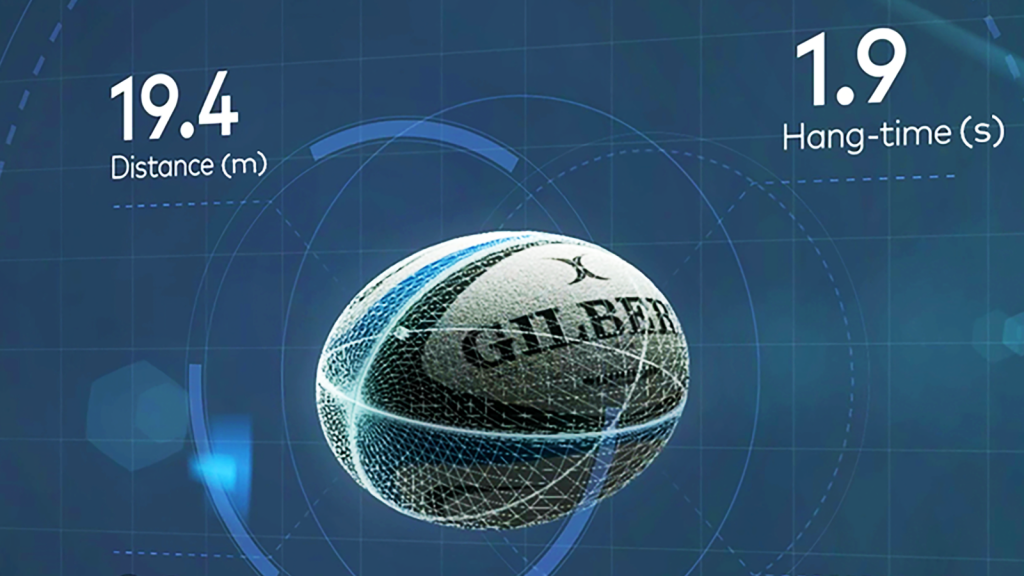
One of the more innovative developments is the Smart Rugby Ball. Developed through a partnership between rugby equipment manufacturer Gilbert and sports technology company Sportable, the ball contains an embedded microchip which, combined with tracking beacons around the pitch, captures three-dimensional data on its movement. Metrics include speed, distance, spin and kick hang time, providing coaches with more detailed performance analysis while giving broadcasters new statistics and visualisations to bring the action to life. The technology has featured in Super Rugby Pacific and international rugby, as well as Major League Rugby in the US.

Player tracking wearables
Player tracking is another established area of performance technology, with companies such as Catapult supplying wearable GPS devices and analytics platforms to professional teams and national unions. Typically worn in a vest between the shoulder blades, the devices capture information including distance covered, acceleration, high-speed running and physical workload, helping performance staff monitor players, optimise training and manage fatigue.
Smart mouthguards
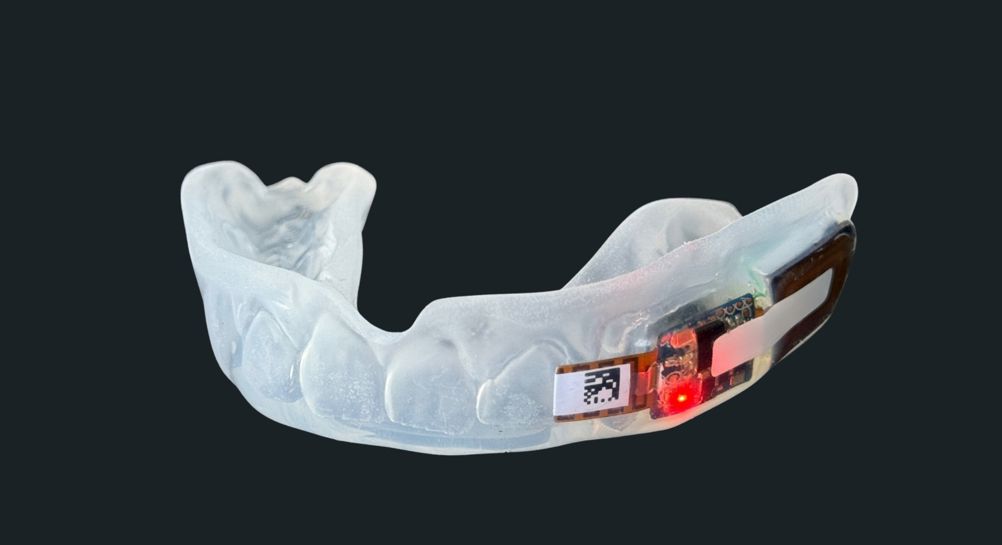
Player welfare is also benefiting from wearable technology. World Rugby has integrated smart mouthguards supplied by Prevent Biometrics into its Head Injury Assessment (HIA) protocols. Embedded sensors measure head acceleration and send real-time alerts to independent pitch-side doctors when potentially significant impacts occur. This enables medical teams to identify players who may require assessment, even when an incident has not been spotted by officials or broadcast cameras.
Data platform
Underpinning much of professional rugby’s statistical analysis is Stats Perform and its Opta data platform. An established data collection partner to many leading rugby federations and competitions, Opta captures thousands of individual match events, from tackles, passes and carries to scrums, lineouts and turnovers. Its data supports coaching and recruitment decisions, predictive performance analytics and the statistics used by broadcasters and digital platforms to explain the game.
Officiating & Match Technology – Hawk-Eye
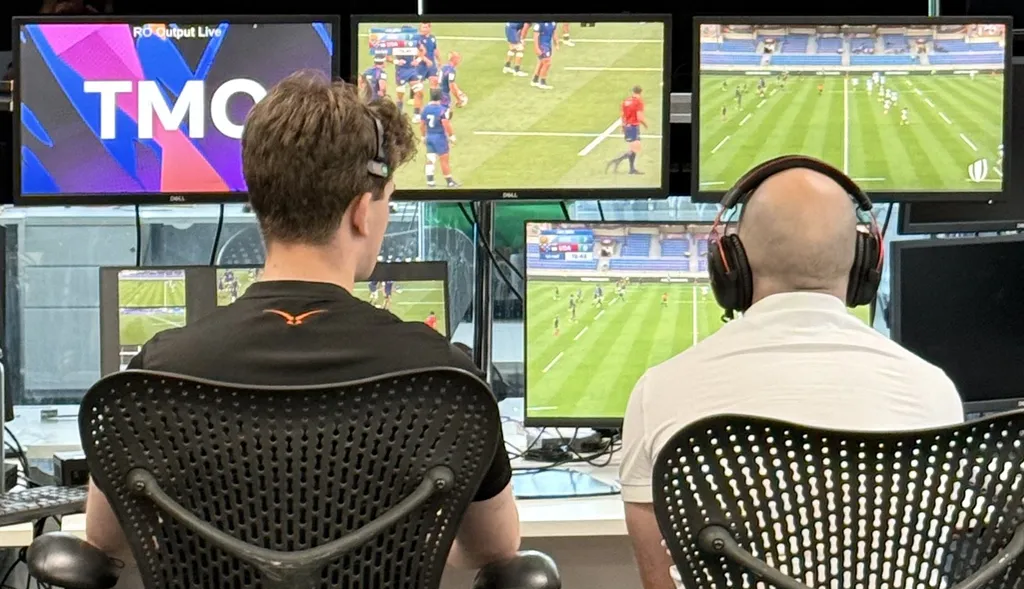
Video technology is an integral part of modern rugby, with Hawk-Eye providing systems that support the Television Match Official (TMO) and disciplinary review processes. Its technology gives match officials access to multiple camera angles, slow-motion replays, split-screen comparisons and enhanced zoom functionality to assess tries, potential infringements and foul play.
World Rugby is now taking this a step further, trialling a fully remote TMO hub in partnership with Hawk-Eye. Introduced at the World Rugby Nations Cup and Junior World Championship in 2026, the system allows officials to review matches from a centralised facility rather than being located at individual stadiums. By giving officials independent access to all available camera angles, the initiative aims to improve the speed, consistency and accuracy of decisions while reducing the cost of delivering advanced officiating technology across the game.

Digital Platforms and Content – RugbyPass and World Rugby Studios
Beyond the live match, World Rugby is investing in digital platforms and content to connect with audiences throughout the year. At the centre of this ecosystem is RugbyPass, an international rugby media platform providing news, analysis, video, podcasts, documentaries, highlights, fixtures and live match statistics.
Working alongside World Rugby Digital, RugbyPass provides a distribution platform for content reaching both established rugby audiences and more casual fans across international markets. The platform also creates opportunities for commercial partners to integrate their brands into editorial, video and social content, extending sponsorship beyond traditional stadium and broadcast advertising.
Supporting this is World Rugby Studios, the organisation’s dedicated content production operation, which creates original documentaries, live shows, podcasts, analysis and short-form social video. Together, RugbyPass and World Rugby Studios provide a digital-first content ecosystem designed to increase engagement, grow audiences and give commercial partners more ways to connect with rugby fans.
Embracing technology together
As the Nations Championship establishes itself on the international calendar and Australia prepares to host the Men’s Rugby World Cup in 2027, technology will become increasingly important to the sport’s continued development.
However, rugby faces a challenge in ensuring that innovation is developed and implemented consistently across the global game. With the commercial and competition landscape divided between Six Nations Rugby and SANZAAR, alongside World Rugby’s responsibility for governing the international sport, there are multiple organisations responsible for shaping its international future.
Collaboration is vital. Whether establishing consistent data standards, connecting digital platforms, sharing performance insights or developing new broadcast experiences, the greatest opportunities will come from technology that can operate across competitions, federations and territories. A smart ball, for example, has the potential to generate value for players, coaches, broadcasters and fans, but its impact is significantly greater when the technology and associated data can be adopted consistently across the sport.
The emergence of the Nations Championship provides an opportunity to bring these organisations closer together, creating a more connected international product and a platform for shared innovation. Ultimately, rugby’s ability to embrace technology will depend not just on the quality of individual solutions, but on how effectively its governing bodies, competition organisers, broadcasters and technology partners work together to develop and implement them globally.