
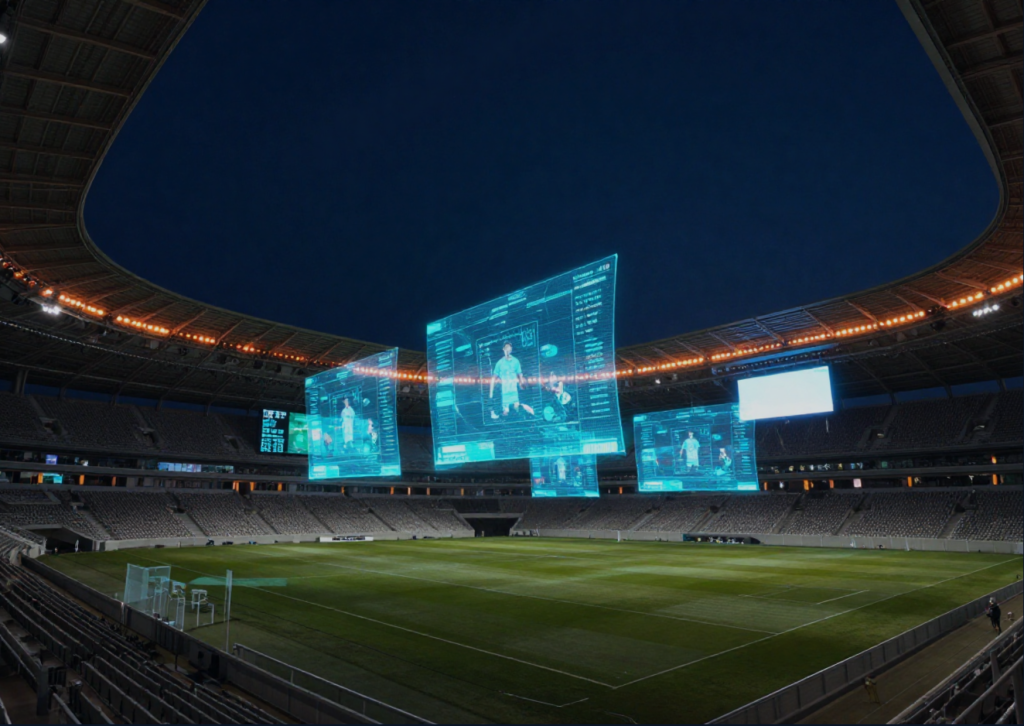
Digital transformation initiatives are no longer experimental projects within sports organizations. They are becoming the foundation of how the industry operates, competes, and engages. Driven by Artificial Intelligence, private 5G connectivity, and centralized data ecosystems, these initiatives are fundamentally reshaping the future of sports itself, influencing everything from player health to how fans experience the game.
At the center of this shift is the growing ability to capture, process, and act on data in real time. Teams are no longer relying on isolated metrics or post-game analysis. Instead, they are building fully integrated data environments that allow them to monitor athlete performance continuously and make predictive decisions. This evolution is most visible in the emergence of the “digital athlete.” Projects like the NFL’s Digital Athlete Initiative combine wearable sensors and machine learning to model the biomechanics of impact, enabling teams to anticipate injury risks before they fully materialize. The idea of preventing injuries, rather than simply reacting to them, marks a fundamental change in how organizations think about performance and longevity.
This deeper level of insight extends beyond traditional tracking methods. Innovations such as advanced biometric sweat patches now allow teams to measure fatigue through biochemical signals like lactate levels and cortisol, offering a much more nuanced understanding of physical stress. At the same time, dedicated biomechanics labs—widely adopted across leagues like the NBA—are creating standardized athlete profiles that influence not only training, but also recruitment, contract valuation, and long-term investment decisions. Data is no longer just a performance tool. Instead, it has become a strategic asset across the entire organization.
While transformation is happening on the field, it is just as evident in the stadium. Physical venues are evolving into highly connected environments that operate more like intelligent systems than static infrastructures. Through digital twin technology, teams can simulate real-world stadium conditions and optimize everything from staffing to crowd movement before fans even arrive. These virtual models make it possible to reduce congestion, improve safety, and significantly enhance the overall fan experience without relying on trial and error.
Inside the venue, technologies such as computer vision and IoT sensors are redefining how fans interact with their environment. Cashierless concessions eliminate wait times, while real-time crowd analytics provide live updates on everything from restroom lines to food availability. These seemingly small improvements collectively transform the rhythm of attending a live event, making it smoother, more predictable, and more enjoyable.
All of this is supported by robust private 5G networks, which form the backbone of modern stadium infrastructure. With the ability to handle tens of thousands of simultaneous connections, these networks enable seamless mobile engagement, in-seat content delivery, and emerging experiences such as augmented reality overlays and real-time sports betting. Connectivity is no longer a convenience. It is a requirement for delivering the next generation of live sports experiences.
Perhaps the most visible impact of digital transformation initiatives is in how fans consume content and connect with teams. The era of passive viewership is fading, replaced by highly personalized and interactive fan engagement models. AI is now capable of automatically tagging live gameplay, generating instant highlights, and delivering customized content feeds tailored to individual preferences. Fans are no longer watching the same broadcast; they are experiencing their own version of the game.
At the same time, organizations are building direct-to-consumer ecosystems that allow them to own the relationship with their audiences. By shifting engagement to proprietary platforms, teams can offer dynamic ticket pricing, personalized offers, and digital collectibles, all while gaining deeper insights into fan behavior. This direct connection is reshaping the business model of sports, reducing reliance on traditional media channels and opening up new revenue streams.
Even the way games are officiated is changing. Advances in computer vision are bringing a new level of precision and transparency to decision-making, particularly in sports where judgments have historically been subjective. By providing real-time visual validation, these systems enhance both accuracy and trust, creating a more informed and engaged viewing experience.
Taken together, these developments illustrate a broader transformation that goes far beyond technology adoption. As data becomes a strategic asset, federations that fail to build unified data ecosystems risk losing competitive advantage in athlete development, commercial partnerships, and fan engagement. Digital transformation initiatives are redefining what it means to compete, to host, and to engage in the world of sports. Organizations that embrace this shift are not just improving efficiency or enhancing entertainment; they are actively shaping how the game is played, experienced, and valued in the years ahead.
As these capabilities continue to scale, one of the most critical and often underestimated aspects of digital transformation initiatives is the integration and governance of data across the entire sports ecosystem. The real competitive advantage no longer comes from isolated innovations, but from how effectively organizations can connect performance data, operational systems, and fan engagement platforms into a unified architecture.
Many teams and federations still operate across fragmented legacy systems, where data sits in silos and limits visibility. The shift toward centralized and interoperable data environments is enabling a more holistic understanding of both on-field performance and off-field behavior. This allows organizations to make faster, more informed decisions, whether that’s adjusting training loads in real time, optimizing stadium logistics during live events, or dynamically personalizing fan interactions across digital channels.
At the same time, this convergence raises new challenges around data ownership, security, and long-term scalability, especially as ecosystems become more complex and globally distributed. Those who can successfully align technology, data strategy, and organizational processes will be best positioned to unlock the full value of digital transformation and sustain competitive advantage in an increasingly data-driven sports landscape.
For sports leaders, the challenge is no longer deciding whether digital transformation is necessary, but determining where to focus investment and organizational effort. Success will depend on building unified data foundations, modernizing digital infrastructure, and establishing governance frameworks that allow information to move securely across performance, operations, and fan engagement environments. Organizations that can align technology strategy with long-term sporting and commercial objectives will be best positioned to capture value from the next generation of digital innovation.
At TEC, we work alongside sports organizations navigating this shift, helping turn digital transformation initiatives into scalable, high-performance platforms and experiences. Combining deep technical expertise with an understanding of the sports and live events landscape, we support the design and delivery of digital ecosystems that enhance operations, elevate fan engagement, and perform under the pressures of global competition. Our focus is on building reliable, future-ready solutions that evolve with the growing demands of modern sport. Explore our case studies to find out more.
Want to learn how we helped a major sports venue enhance their digital ticketing experience and boost matchday revenues?
Download the full whitepaper and explore the innovative strategies and tools that are reshaping the matchday experience.
Prefer a conversation? Schedule an intro call here to explore tailored solutions for your organisation.