Table of Contents
Welcome to the TEC Lowdown, our monthly breakdown of the technology partnerships, platforms and innovations shaping the delivery of the world’s biggest sports events and the way fans and other stakeholders experience them. This month:
The Tour de France
What: Cycling’s greatest race.
When: 4th – 26th July 2026
Where: This year’s race begins in Barcelona, but the bulk of it takes riders across France, before an iconic finish ends on the Avenue des Champs-Élysées in Paris
Organiser/s: Amaury Sport Organisation (ASO) a privately-owned French company that forms part of the media group Éditions Philippe Amaury, works closely with host cities, sets the route, oversees logistics, and manages media partnerships for the annual cycling event.
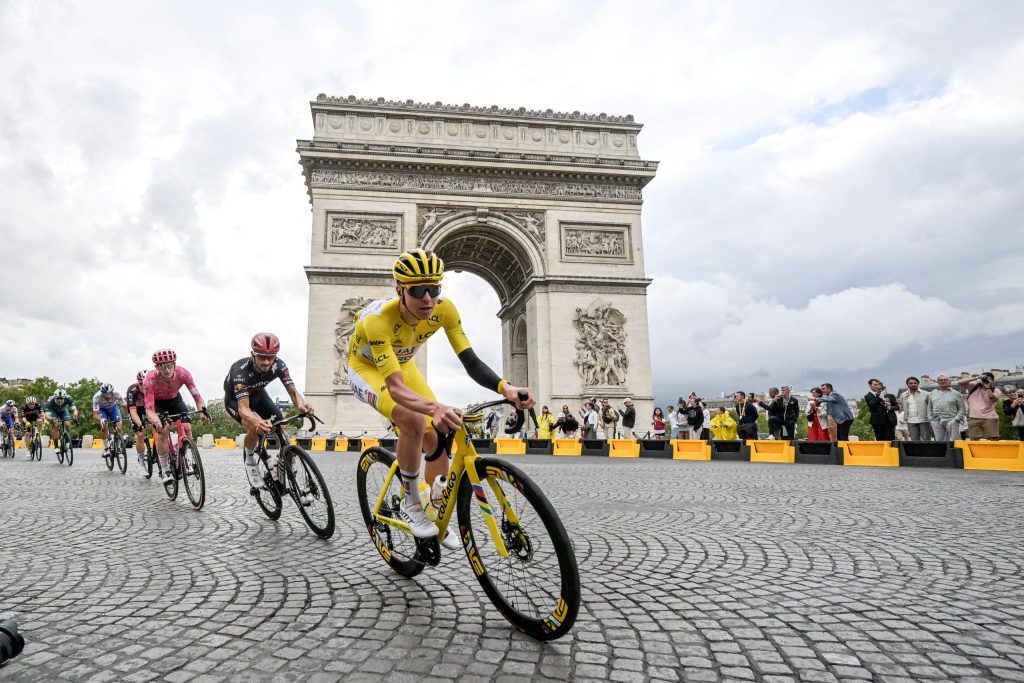
Over a century old, the Tour de France has transformed into one of the world’s most technologically advanced sporting events. An increasingly sophisticated ecosystem of technology partners underpins every aspect of the race – from athlete performance and race operations to broadcast production, digital engagement and fan experiences.
Capgemini: Building a Data-Driven Tour
Leading this transformation is Capgemini, which became the Tour de France’s Official Technology Partner in 2024 through a five-year agreement with ASO. Their role extends far beyond traditional IT support, centring on creating a more connected, intelligent and personalised Tour for riders, organisers, broadcasters and fans alike.
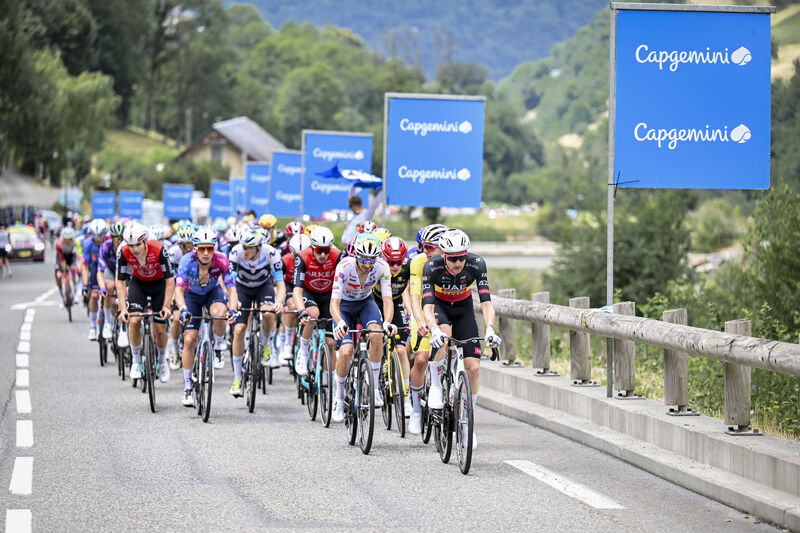
A flagship initiative is the Race Centre, a central digital platform that aggregates live race data from GPS tracking, timing systems, weather feeds and rider positions into a single operational dashboard, giving organisers, broadcasters and media partners richer, real-time information throughout every stage.
Artificial intelligence plays an increasing role too, automating data processing, improving operational decision-making and generating richer digital content for fans. Machine learning models analyse race dynamics to produce predictive insights, such as the likelihood of a successful breakaway or projected finish times based on terrain, rider form and weather.
The partnership also supports the Tour’s sustainability ambitions by digitising operational processes, improving logistics planning and reducing reliance on paper-based race administration.
Performance Technology: Data Driving Marginal Gains
While the Tour itself has few centralised performance technology partners, virtually every WorldTour team arrives equipped with sophisticated performance ecosystems built around companies including Garmin, Wahoo Fitness, Shimano, SRAM and TrainingPeaks.
Cyclists continuously generate data on power output, cadence, heart rate, speed, gradient, elevation and GPS position – metrics central to pacing mountain climbs, managing fatigue across three weeks of racing, and informing tactical decisions.
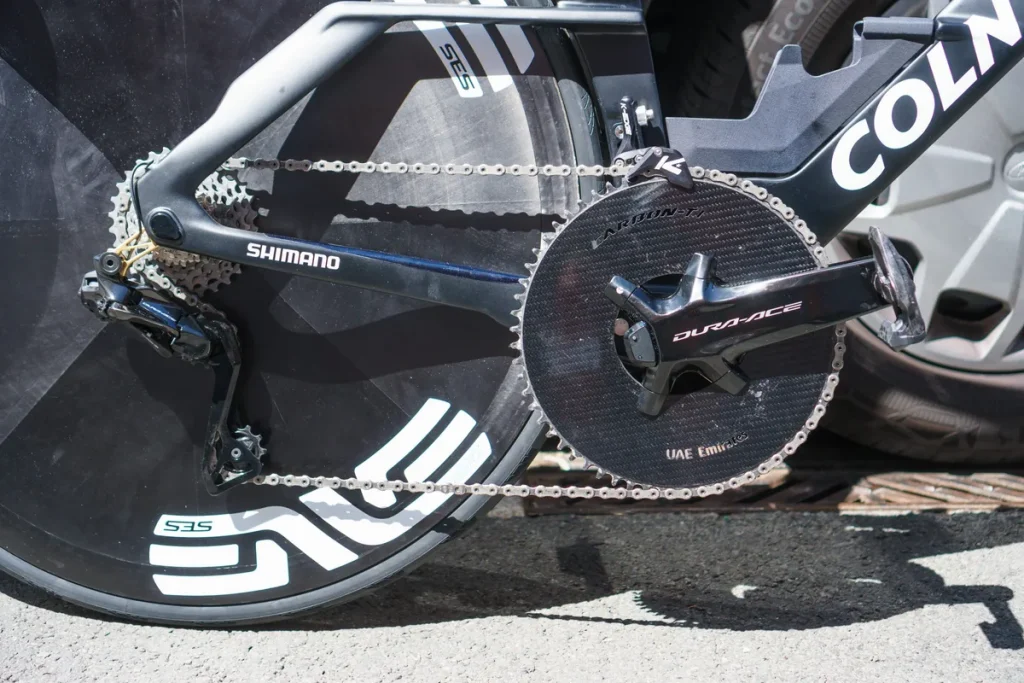
Electronic groupsets from Shimano and SRAM provide wireless shifting with millisecond precision while letting mechanics monitor component health throughout the race. Combined with aerodynamic modelling, wind tunnel testing and increasingly AI-assisted race simulations, now an integral part of tour preparations, teams continue chasing the marginal gains that often decide the overall winner.
How Team Tech Stacks are Shaping the Modern Tour
Three clear trends can be seen across leading teams:
- Performance is fully data-driven – power output functions as racing’s “currency,” AI models inform pacing and attack decisions, and wearables track fatigue in real time.
- Equipment is integrated into data systems – bikes are effectively connected devices, with components that generate performance feedback loops and aerodynamics are continuously optimised.
- Teams are becoming media platforms as well as sports teams – GPS and performance data feed into fan content enabling social storytelling to be built around analytics, and riders are increasingly acting as “data narrators” of their own performance.
Live Race Data and Timing
Live data has become one of the defining features of the modern Tour, transforming how the race is managed, broadcast and experienced. Every stage generates millions of data points offering real-time insight into rider positions, race dynamics and performance.
Capgemini sits at the heart of this ecosystem, centralising and analysing live race data through cloud computing, AI and advanced analytics, integrating GPS tracking, official timing, weather feeds and route data into a single platform for organisers, broadcasters and fans.
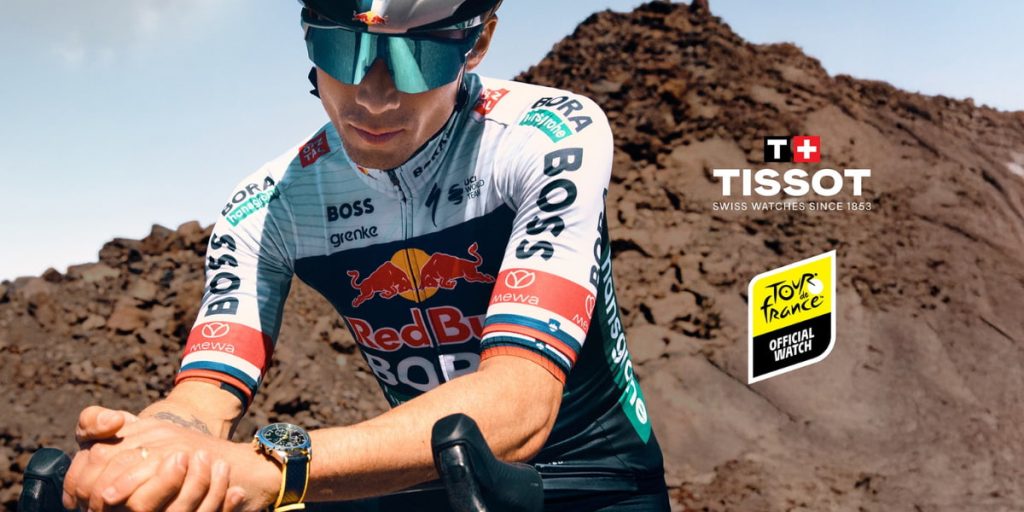
Official timing is delivered by TISSOT, whose transponder-based systems capture precise rider times at checkpoints, climbs, sprint points and finishes, underpinning every classification from the General Classification to the King of the Mountains. Location data comes from GPS devices fitted to race vehicles and motorcycles, letting broadcasters accurately display rider positions, breakaway gaps and estimated arrival times throughout each stage.
Broadcasting: Delivering a More Immersive Fan Experience
The Tour remains one of the most technically complex live broadcasts in sport, covering more than 3,300 kilometres across mountains, countryside and cities. Continuous coverage demands an extensive production network of helicopters, relay aircraft, motorcycles, fixed cameras and drones.
For 2026, host broadcaster France Télévisions works alongside ASO and international rights holders including Warner Bros. Discovery (via Eurosport), ITV and NBC Sports to deliver increasingly data-rich, interactive coverage. Live race data is central to this: GPS tracking, timing systems and rider telemetry allow broadcasters to display real-time speed, time gaps, breakaway distances and estimated finish times. Capgemini adds AI-powered analytics on top, generating predictive insights that add context for dedicated fans and casual viewers alike.
Augmented graphics – interactive route maps, climb profiles, gradient indicators and elevation data – bring each stage to life, while AI-assisted production workflows let broadcasters turn key race moments into highlights and social content within minutes.
Broadcasters are also expanding second-screen experiences via their digital platforms, offering live rider tracking, detailed statistics, alternative camera angles and interactive maps alongside television coverage, turning the Tour into a connected, multi-platform viewing experience.
Digital Platforms and Fan Engagement
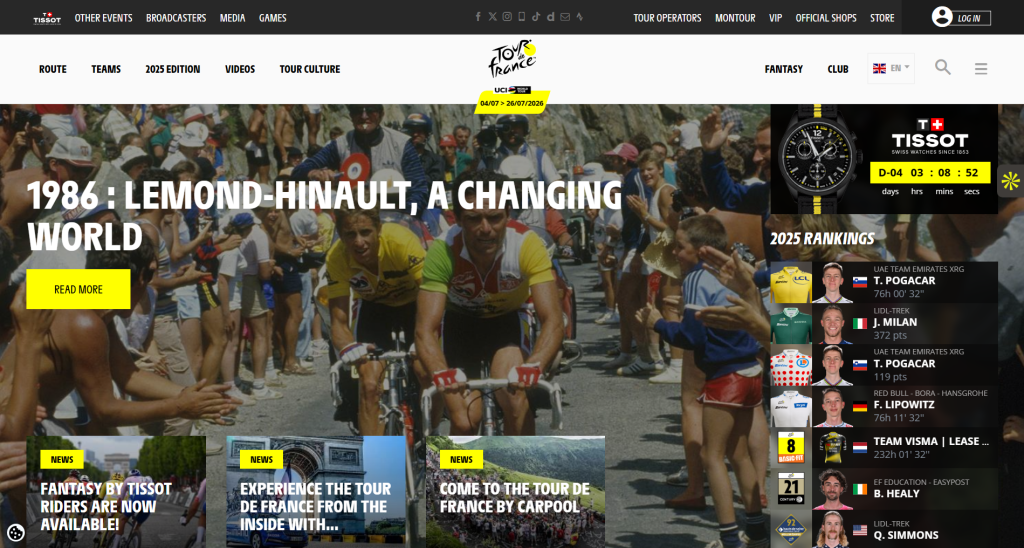
The official Tour de France website and app have evolved into comprehensive digital companions powered by live data and cloud technology, giving fans access to live rider tracking, interactive stage maps, real-time classifications, detailed rider profiles, push notifications, video highlights and race statistics.
Capgemini’s technology is helping make these experiences increasingly personalised, with AI expected to recommend content based on favourite riders, teams or stages – mirroring trends already established across leading streaming and sports platforms.
Social Media and AI Content Creation
Social media has become one of the Tour’s most important engagement channels, particularly among younger audiences. Capgemini’s digital expertise supports faster creation and distribution of race content through AI-assisted editing, automated tagging and intelligent content management, enabling organisers to publish highlights, graphics and key statistics almost instantly across platforms.
Teams are also using technology to bring fans closer to riders through behind-the-scenes training footage, on-bike perspectives, recovery insights and performance data visualisations, building a storytelling ecosystem that extends well beyond the live race itself.
Technology Supporting Sustainability
Technology is increasingly central to making the Tour more sustainable. Capgemini supports ASO’s digital transformation by optimising logistics, reducing paper-based administration and improving operational efficiency through cloud-based workflows and data analytics. Better route planning, fleet management and resource allocation all help reduce the environmental footprint of staging one of the world’s largest annual sporting events.
At TEC, we deliver technology for the biggest sporting events in the world. Find out more.