
Table of Contents
Welcome to the TEC Lowdown, our monthly breakdown of the technology partnerships, platforms and innovations shaping the delivery of the world’s biggest sports events and the way fans and other stakeholders experience them. This month:
The Premier League
What: Football’s biggest domestic league
When: 21st August 2026 – 30th May 2027
Where: England
Organiser/s: The Premier League is run as a private corporation owned by its
20 member clubs, who act as shareholders
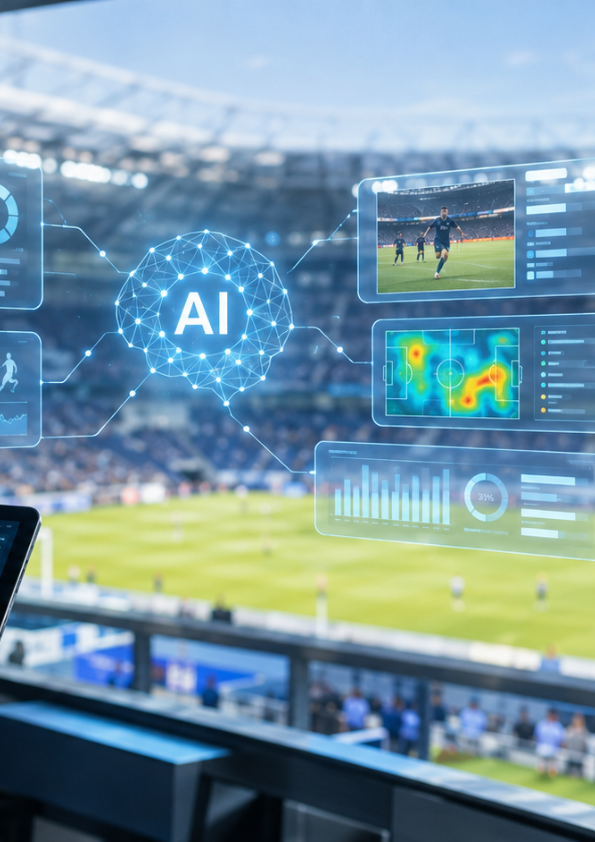
Since The Premier League’s launch in 1992, technology has played a big part in its ascent to the pinnacle of domestic football. For the 2026/27 season, the league’s technology strategy is centred on a small number of strategic partnerships supporting wholly owned digital platforms rather than a large portfolio of disparate suppliers. These initiatives are designed to achieve four core objectives: deliver a world-class broadcast product, create more personalised digital fan experiences, provide trusted officiating technology and build greater long-term control over the League’s media and data ecosystem.
Microsoft – The Premier Technology Partner
In July 2025, Microsoft and the Premier League announced a five-year strategic partnership making Microsoft the League’s Official Cloud and AI Partner – one of the biggest technology deals in the competition’s history. The partnership is anchored around four areas: fan engagement, match insights and analysis, cloud transformation, and organisational productivity. It aims to transform how 1.8 billion fans across 189 countries engage with the league.
The flagship product of the partnership is Premier League Companion, a Copilot-powered assistant on the League’s app and website. Built on Azure AI Foundry Services, it draws on 30 seasons of stats, 300,000 articles and 9,000 videos, giving fans immersive access to content about their favourite clubs and players. Fans can ask natural-language questions (e.g. “How has Salah performed against Arsenal?”) instead of searching manually.
There is also a dedicated Fantasy Premier League Companion, built on Microsoft Foundry with Azure OpenAI and official Premier League data, gives FPL’s 13 million-plus managers conversational, AI-driven squad advice, transfer suggestions and captaincy guidance. It combines match stats with FPL-specific performance trends for tailored recommendations, acting as a “personal assistant manager”, supporting rather than replacing human decision-making, leaving final squad calls to the fan.
Microsoft is also transforming the live match experience. Broadcasts are enhanced with real-time data overlays and post-match analysis, giving fans real-time statistics. Near-real-time match insights and second-screen overlays feature live telemetry such as passes, chances and player metrics, while editorial-assist tools speed up content production.
This even extends into third-party punditry: the Companion has been integrated into Gary Neville’s The Overlap network, feeding near-real-time, AI-driven data and analysis directly into shows like Stick to Football, The Breakdown and The Fan Debate.
Microsoft is also hosting the League’s historic archive on Azure, improving content curation and distribution to broadcast licensees worldwide — replacing a prior Oracle deal that had served the League from cloud regions in the UK, Singapore, the US and Brazil.
From an operational perspective, Microsoft 365 supports internal workflows, alongside Power Platform for process automation and Dynamics 365 for finance and operations.
Adobe – Powering Creativity & Fan Engagement
Shortly after the Microsoft deal was announced, The Premier League unveiled a multi-year partnership with Adobe, confirming them as both the League’s Official Creativity Partner and Official Digital Fan Experience Partner. Where Microsoft’s deal centres on cloud infrastructure and AI-powered insight, Adobe’s role focuses on creativity, marketing and personalisation. Its tech in these areas is central to the League’s digital transformation, unlocking new ways for fans to create and share content, engage with Fantasy Premier League and enjoy more personalised digital experiences.
The core technologies are Adobe Express, Firefly generative AI, GenStudio for Performance Marketing and Adobe Experience Platform. Adobe Express was integrated into the Premier League’s website and app for the 2025/26 Fantasy season, and fans now have access to professional-grade creative tools, simplified for every skill level – from crafting custom Fantasy team badges with Firefly generative AI to designing matchday graphics through Express. Firefly lets Fantasy managers create personalised badges and kits for their teams within Express, using exclusive Premier League-themed templates to celebrate their support, and Firefly is built on commercially safe generative AI, giving fans licensed, brand-safe tools rather than generic AI image generators.
On the League side, Adobe Experience Platform lets the Premier League build a deeper understanding of what matters to each fan and deliver personalised experiences at scale, across every digital channel – spanning campaigns, app, email and Fantasy Premier League – while maintaining consistent branding across global markets.
The League's New In-House Media Operation
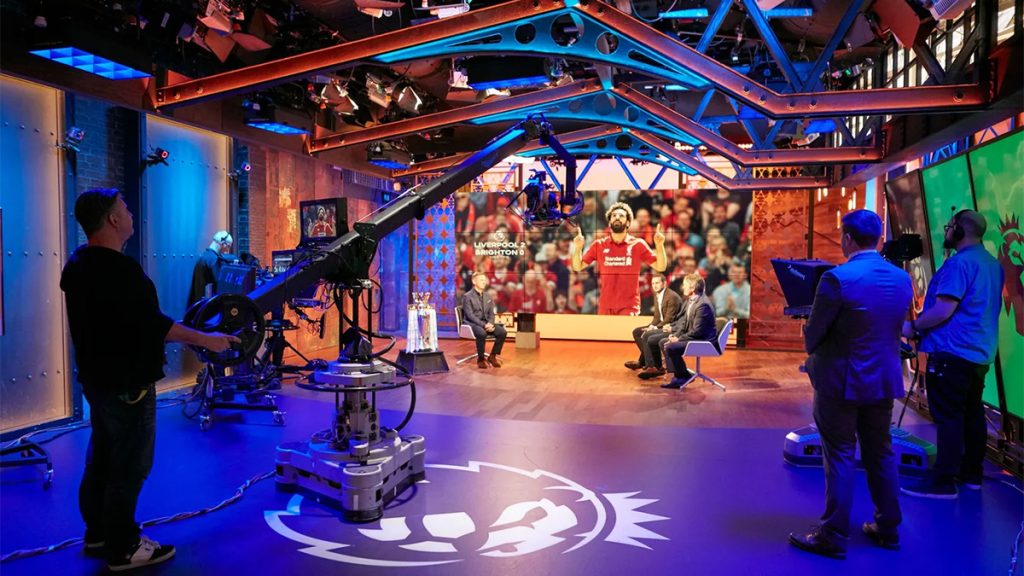
One of the most significant structural changes for the 2026/27 season is the launch of Premier League Studios, bringing international media production fully under Premier League ownership after more than two decades of operating through Premier League Productions in partnership with IMG.
Premier League Studios has been built on a mainly software-based, hybrid environment designed for flexibility as needs evolve. It uses a multi-cam cloud service to expand match coverage in UHD, alongside Unreal Engine-powered virtual studio sets offering multiple distinct programme “looks” from one physical space. Remote production and cloud tools cut cabling and satellite costs while storing every match since 1992 for global broadcasters to draw on. Combined with AI-assisted graphics, replay and analysis tools, this gives the League full creative and operational control to produce faster, higher-quality coverage for audiences worldwide.
The League's Largest Owned Fan Platform
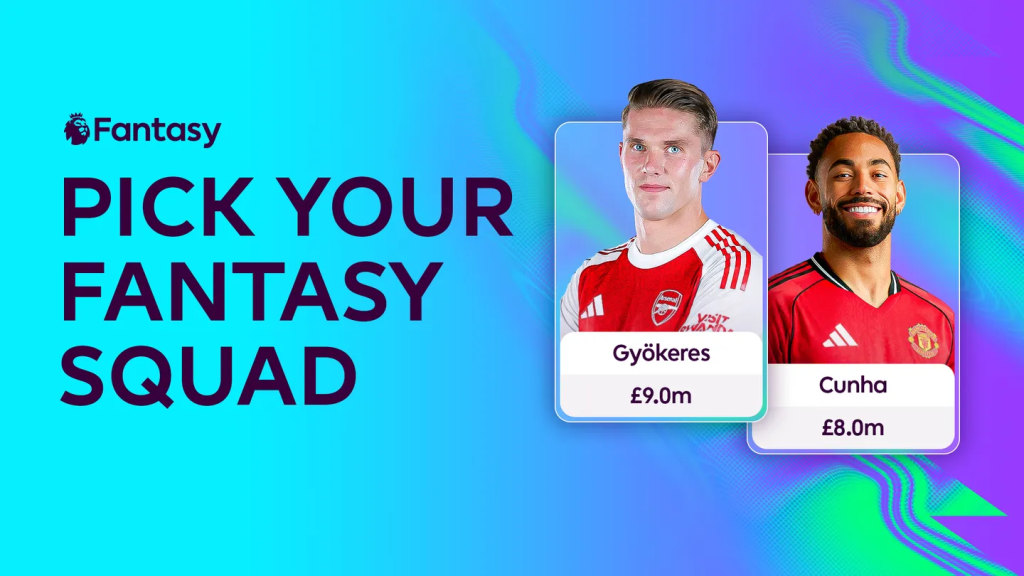
Since its 2002 launch, Fantasy Premier League (FPL) has grown into a cornerstone of the League’s digital strategy, now serving over 11 million managers worldwide. Its evolution has accelerated through the recent Microsoft and Adobe partnerships. In addition to initiatives such as AI squad assistance and AI-generated team branding, together they’ve layered enhanced statistics and richer data visualisation onto the core game, turning FPL from a simple points tracker into an AI-assisted, highly personalised, socially shareable experience.
Officiating Technology
Hawk-Eye remains one of the League’s longest standing and most critical technology partners, providing the trusted infrastructure underpinning goal-line technology. Seven cameras positioned at each end of the pitch, typically on the stadium roof, track the ball and relay a decision to the referee’s watch within a second of it crossing the line, removing doubt from one of football’s most contentious calls.
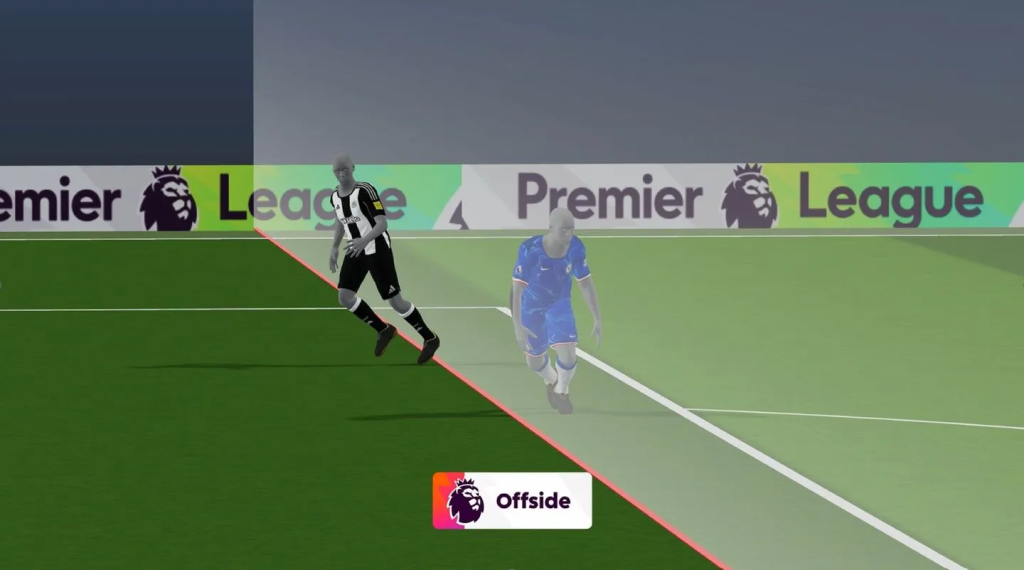
Hawk-Eye’s optical player tracking and high-speed camera systems also supported VAR’s offside process when it was introduced, feeding the footage officials used to manually draw offside lines. However, this proved to be a slow and occasionally unreliable process so in 2025 the League moved to semi-automated offside technology, supplied by Genius Sports’ GeniusIQ computer vision. The system uses up to 30 cameras installed around every stadium, with several capturing footage at 100 frames per second – double the rate of typical broadcast cameras – tracking up to 10,000 data points per player to determine automatically whether any attacking player was offside. GeniusIQ generates full 3D renders of players, the ball and the offside line within seconds, enabling far more precise decisions, with outcomes reviewed and approved by the VAR before a decision graphic is automatically generated and shared with fans in the stadium and media.
Together, this combination of goal-line and offside technology improves the speed, efficiency and consistency of officiating, while 3D graphics broadcast to fans and media enhance transparency around how decisions are reached.
Direct-to-Consumer Streaming - The Way Forward?
The 2026/27 season also marks the launch of Premier League+, the Premier League’s first and much talked about direct-to-consumer streaming service. While initially limited to Singapore and delivered in partnership with StarHub, Premier League+ represents a significant strategic shift towards greater control of distribution and customer relationships.
Operationally, the League’s new in-house production hub in Olympia, London underpins the technical delivery: cloud-based production, remote workflows and Microsoft’s Azure infrastructure give the League the streaming, data and content-management capability needed to operate its own platform.
Strategically, Premier League+ represents a deliberate, low-risk test of a model long speculated about but never attempted: the League has spent recent years fine-tuning a technological and commercial framework that could support a direct-to-consumer service in specific instances. If successful, the model could be replicated in other international markets, potentially following the NFL, NBA and MLB down a path toward leagues becoming media companies in their own right – though whether Premier League+ scales globally or stays a bespoke experiment in one market remains, for now, an open question the League is deliberately taking its time to answer.
At TEC, we help elite sports organizations build connected digital ecosystems that strengthen fan engagement and support long-term growth. Explore our solutions for elite sports organizations to see how technology can help turn fan attention into lasting engagement.