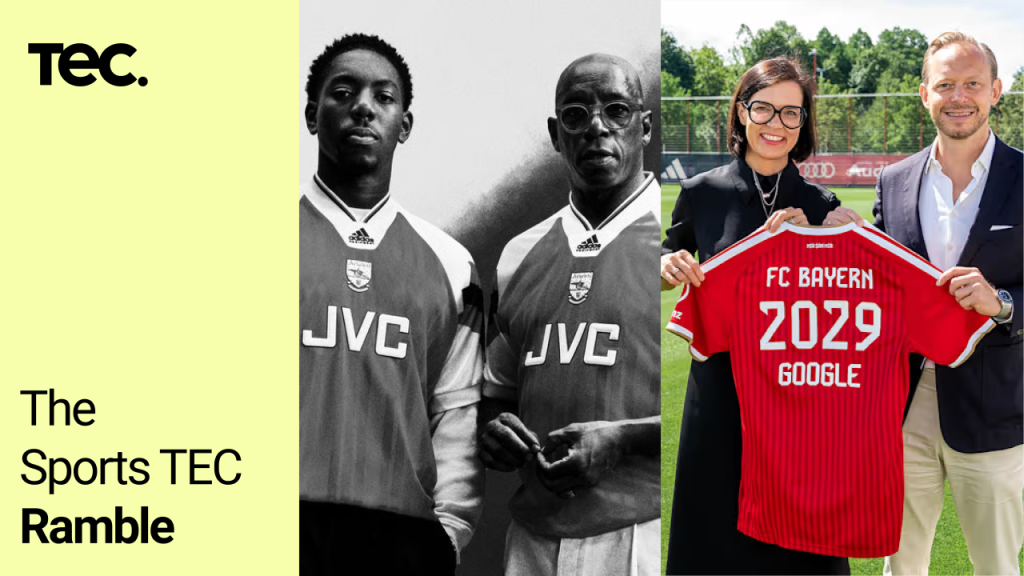
Retro shirts are back! (did they ever go away?)
The polyester-powered stylings of yesteryear are shaping the designs of many current kits, but they are also a booming business in their own right with sports brands relaunching retro ranges and specialist retailers like Classic Football Shirts going from strength to strength, attracting celebrity investment along the way.
At a club level, this retro trend provides a reminder of the different brands that have adorned them over the years and an insight into how technology’s relationship shirt sponsorship has evolved over the years. A look at the front of shirt sponsorship categories since the dawn of the Premier League, is instructive on how both society and sponsorship have evolved and highlights the prominent role that tech companies have played.
When the Premier League kicked off in 1992, the front of the shirt was the pinnacle of a very static sponsorship proposition. It offered mix of visibility, association benefits and the perks of tickets and hospitality. This was an age before the digital boom with no social media, no smartphones and no data collection. As technology changed society, the reach – and therefore the economics – of football and the potential for direct engagement, the sponsorship proposition changed and with it the brands that were interested.
The Premier League front of shirt sponsor categories can broadly be grouped into three eras. Following the league’s launch, the 1990’s were dominated by consumer electronics and alcohol brands. As PCs and games consoles entered people’s homes and TVs, video players and hi-fi systems became mass market products, Japanese electronic brands like Sharp, JVC, NEC and Brother rushed to tap into the domestic visibility and reach this new entertainment product offered (Sony & Nintendo took a similar approach through front of shirt seals with Serie A clubs Juventus & Fiorentina).
Likewise, regional breweries such as Carlsberg, Holsten and Newcastle Brown Ale saw the league as the ideal opportunity to growth their share of the local male working-class audience it attracted.